Dustin Dale Gaspard: The Bayou Bard
Dustin Dale Gaspard and the mystery of making music
Cow Island native Dustin Dale Gaspard’s Cajun bona fides stretch back nine generations to his ancestral grandmother, whose exile led her to find a place of solace in Acadiana. While not musicians, Gaspard’s family was always musical, with ‘50s rock and roll and swamp pop records a common backing track to their cozy Cajun life. Yet, it was the language which Dale first heard at his grandparents’ knee that would become the long-fused muse of his life and art; the musical voluptuousness of French words and intonations ping-ponging across his childhood home subsumed and fascinated him. But that was just one part of the puzzle. The other came during a chance visit to Artmosphere, the seminal Lafayette music venue, as Gaspard witnessed a performance by singer/songwriter Matt Ami, one that shook and spoke to him.
“There were like four people in the room, but he absolutely captivated me,” recalls Gaspard. “With just a guitar and his voice, he was capable of explaining and fulfilling all of these mysteries of the world. The songs were incredible and showed me that there was a way to be a vessel for music, one that not only helps dissolve those mysteries but allows you to become one.”
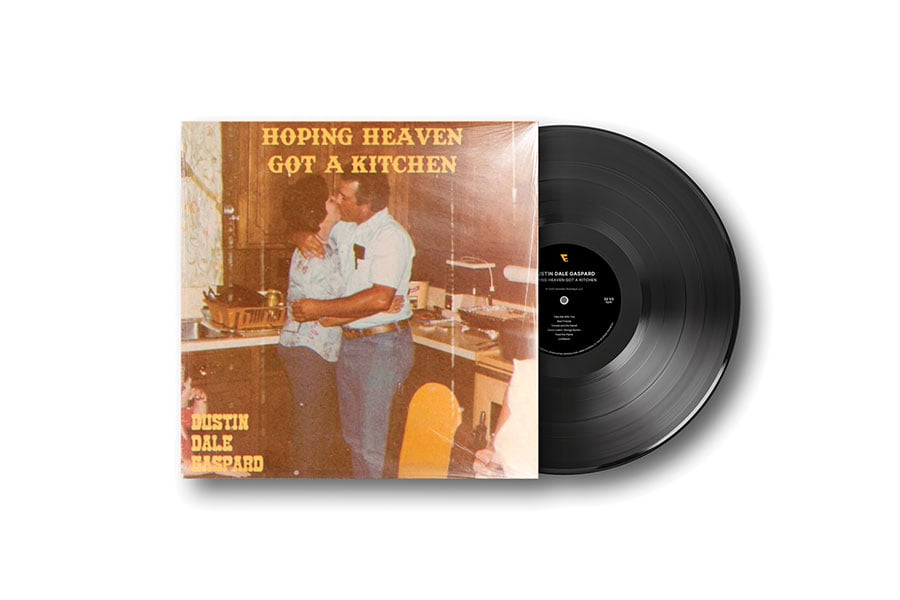
While the bug of musicianship had surely caught Gaspard, his sense of self was initially adrift; battered by a young man’s preternatural instincts to be a ‘90s frontman or heartthrob, less an artist than a pretty face masquerading as one. But, at a songwriting retreat in 2019, Gaspard met and collaborated with musicians from around the world — the U.K., Ireland, French Canada — and found in their bespoke cultures a reclamation of their roots, of languages and customs, of ancestry as immediate as it was influential. This revelation connected the disparate strands of his artistry, the yearning of a storyteller with a guitar and the proud child of Acadiana. With that, Gaspard enveloped himself in all that had born him, the people, relationships and language that were the ballast for nobody’s story but his own. His first album, “Hoping Heaven Got a Kitchen,” speaks directly to this cross section of authenticity and renewal; a swamp pop reverie that immortalizes his unique corner of the world in the amber of song, of a summer afternoon amid the marshlands where the sun never sets and nobody will ever die. In the sound of childhood, the voices of ancestors and the stories all his own, Gaspard had finally found his mystery worth encompassing.
As a contestant on the 28th season of NBC’s “The Voice,” Gaspard more than broke ground; he evaporated it as he sang Cajun French as a part of the infamous Blind Audition segment of the show. His performance, a cover of Sam Cooke’s “Bring It On Home To Me,” stunned the judges, including country music legend Reba McEntire and his eventual coach, Irish singer/songwriter Niall Horan. The experience for Gaspard was a surreal one, offering him a platform to spread the gospel of Cajun French, a once-in-a-lifetime shot which he was desperate not to fumble.
“I saw it as an opportunity to turn the volume all the way up, to perform in a way that legitimizes my existence, my soul. It gave me a chance to do something bilingually that shows both sides of who I am,” says Gaspard. “Things like that aren’t supposed to happen to people from Cajun Country. I was on a movie lot where they were filming ‘Jurassic Park’. It was a long, long shot, but it somehow worked out because I believed in who I was and where I come from.”
Soon to begin work on his next album after a successful Kickstarter campaign, Gaspard is ready to spin his whirlwind experience on the national stage into his art, chronicling one more chapter in a story that began nine generations ago when a woman was forcibly removed from her home country and found refuge in the heart of Louisiana. That legacy is kept alive and thriving through its most recent torchbearer, a Bayou Bard, as he unspools the mysteries of a brand-new world through the language, lyricism, and love of the old one.